
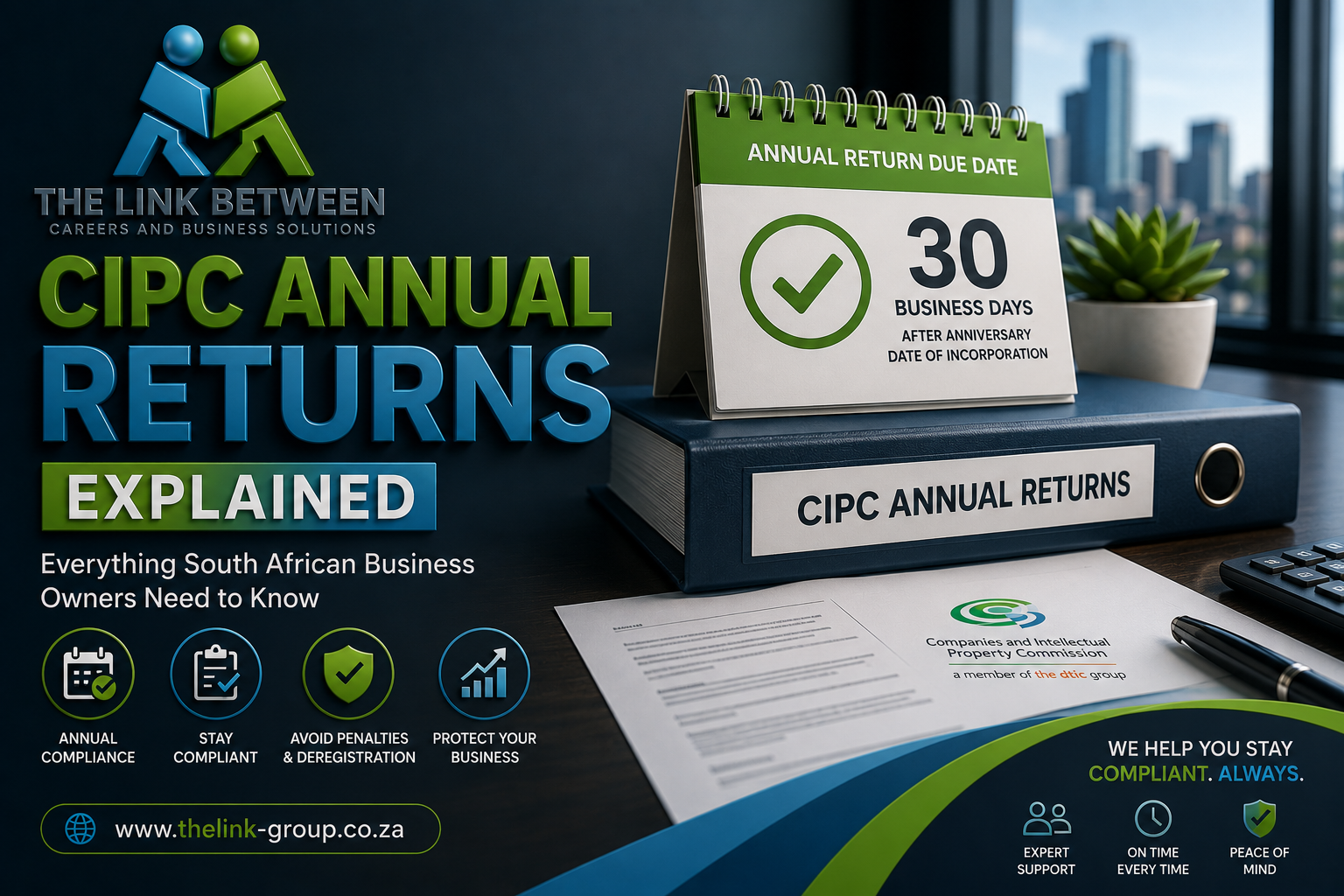
CIPC Annual Returns Explained: Everything South African Business Owners Need to Know
What Are CIPC Annual Returns?
Every registered company and close corporation (CC) in South Africa is required to submit Annual Returns to the Companies and Intellectual Property Commission (CIPC). Annual Returns are a mandatory compliance requirement that confirms your business is still active and conducting business operations.
Many business owners mistakenly believe Annual Returns are a form of taxation. However, Annual Returns are not taxes. They are compliance filings submitted to CIPC to maintain the legal status of a company or close corporation.
Failure to submit Annual Returns can result in penalties, deregistration, and loss of your company’s legal status.
Why Are Annual Returns Important?
Annual Returns serve several important purposes:
- Confirm that the company is still trading.
- Keep company information updated.
- Ensure compliance with the Companies Act.
- Prevent company deregistration.
- Maintain a company’s legal existence.
- Protect directors and shareholders from compliance issues.
By submitting Annual Returns on time, business owners demonstrate that their company remains active and compliant with South African regulations.
Who Must Submit Annual Returns?
The following entities are required to submit Annual Returns:
Private Companies (Pty) Ltd
All registered private companies must submit Annual Returns annually.
Non-Profit Companies (NPCs)
Non-profit companies must also maintain compliance by submitting Annual Returns.
Close Corporations (CCs)
Close corporations registered before the Companies Act changes remain obligated to submit Annual Returns.
State-Owned Companies
State-owned entities are also required to submit Annual Returns according to their compliance obligations.
When Must Annual Returns Be Submitted?
Annual Returns must be submitted within 30 business days after the anniversary date of the company’s incorporation.
The anniversary date is the date on which the company was originally registered with CIPC.
For example:
- Company Registration Date: 15 June 2022
- Annual Return Due Period: Within 30 business days after 15 June each year
Businesses should monitor their due dates carefully to avoid penalties.
What Happens If You Miss Your Annual Returns?
Missing Annual Returns can have serious consequences.
Penalty Fees
Late submissions may attract additional compliance fees.
Company Deregistration
If Annual Returns are not submitted for an extended period, CIPC may begin the deregistration process.
Loss of Business Opportunities
Many tenders, contracts, and funding opportunities require proof of company compliance.
Banking Challenges
Banks often require compliant company records when processing applications for business accounts, loans, and facilities.
Damage to Business Reputation
Suppliers, clients, and government institutions may view non-compliant businesses as higher risk.
What Happens When a Company Is Deregistered?
A deregistered company ceases to exist as a legal entity.
Consequences include:
- Company name becomes unavailable for use.
- Assets may become affected.
- Bank accounts can be impacted.
- Contracts may become invalid.
- Government tender participation becomes impossible.
- Business operations may be disrupted.
Restoring a deregistered company can be time-consuming and costly.
How Much Do Annual Returns Cost?
The cost of Annual Returns depends on:
- Company type
- Annual turnover
- Outstanding Annual Returns
- Penalties and administrative fees
Businesses with multiple years outstanding may incur higher compliance costs.
Information Required to File Annual Returns
To submit Annual Returns successfully, businesses generally need:
- Company registration number
- Company name
- Annual turnover information
- CIPC customer details
- Company compliance information
Ensuring accurate information helps prevent filing delays.
Common Annual Return Mistakes
Many business owners encounter problems because of avoidable mistakes.
Missing Due Dates
Failure to monitor annual compliance deadlines is one of the most common issues.
Incorrect Turnover Information
Providing inaccurate turnover figures can create complications during submission.
Forgotten Customer Passwords
Many businesses lose access to their CIPC profiles and delay compliance filings.
Waiting Until Deregistration Notices Arrive
Businesses often wait until receiving a compliance warning before taking action.
Benefits of Keeping Annual Returns Up to Date
Maintaining compliance offers numerous benefits:
Legal Protection
A compliant company remains legally recognized.
Tender Eligibility
Government and private sector tenders often require compliance verification.
Easier Banking Processes
Banks prefer dealing with compliant entities.
Improved Business Credibility
Customers and suppliers trust businesses that maintain proper compliance.
Business Growth Opportunities
Investors and partners are more likely to engage with compliant companies.
How to Check If Your Annual Returns Are Outstanding
Business owners should regularly verify their company compliance status.
A compliance review can identify:
- Outstanding Annual Returns
- Deregistration risks
- Compliance notices
- Company status issues
Early detection prevents costly compliance problems later.
Professional Assistance With Annual Returns
Many business owners choose professional assistance because the filing process can become complicated, especially when multiple years are outstanding.
Professional Annual Return services can help with:
- Annual Return submissions
- Deregistration prevention
- Compliance reviews
- Company status checks
- Outstanding Return calculations
- Company restoration assistance
Frequently Asked Questions
Are Annual Returns the Same as Tax Returns?
No. Annual Returns are submitted to CIPC, while tax returns are submitted to SARS.
Can My Company Be Deregistered for Not Filing Annual Returns?
Yes. Failure to submit Annual Returns can result in deregistration.
Can I Submit Outstanding Annual Returns?
In many cases, yes. Outstanding Annual Returns can often be submitted to restore compliance before deregistration occurs.
How Often Must Annual Returns Be Submitted?
Annual Returns must be submitted every year.
Do Dormant Companies Need to Submit Annual Returns?
Yes. Even companies that are not actively trading generally remain obligated to submit Annual Returns unless properly deregistered.
Conclusion
Annual Returns are one of the most important compliance obligations for South African businesses. Failure to submit them can result in penalties, loss of legal status, deregistration, and missed business opportunities. By ensuring Annual Returns are submitted on time each year, companies can remain compliant, maintain credibility, and position themselves for long-term success.
If your company has outstanding Annual Returns or you are unsure about your compliance status, professional assistance can help ensure your business remains compliant and protected.